
Key Takeaways
- Pay-per-call leads are live inbound calls sold on performance; you pay only for calls that meet agreed quality rules.
- Intent is higher because the prospect is already on the phone, which usually improves contact and close rates.
- Duration, geo, screening, and exclusivity are the main filters that protect quality.
- Match call volume to agent capacity and verify TCPA practices before scaling.
- Higher cost per call is often offset by lower cost per acquisition when conversion is strong.
If you have ever paid for form fills that never answered the phone, you already understand why pay-per-call leads matter. A name and number sitting in a CRM is a contact. A live caller who dialed your tracking number is a conversation already in progress—and that difference changes conversion rates dramatically.
This guide explains exactly what pay-per-call leads are, how the model works, why phone intent beats form intent in most high-value verticals, and the practical filters that separate billable quality calls from noise. No theory for its own sake—just the framework used by operators who buy and sell these leads every day.
By the end you will know when pay-per-call is the right channel and how to evaluate sources that actually deliver results.
What Are Pay-Per-Call Leads?
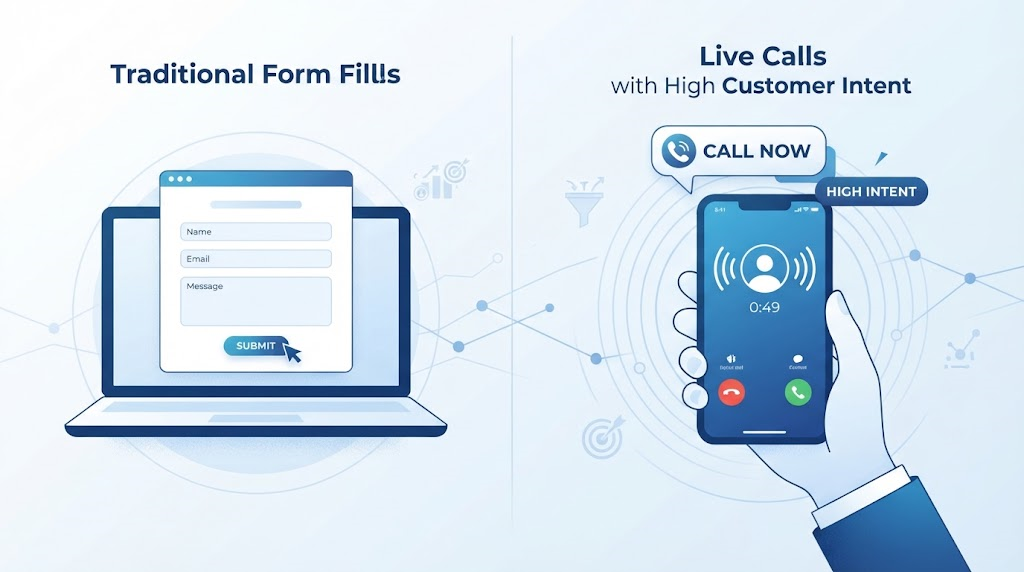
Pay-per-call leads are inbound phone calls generated by marketing activity and sold to advertisers on a performance basis. The advertiser pays only when a call meets agreed qualification rules—usually a minimum duration, geographic match, and sometimes IVR screening. Unlike form leads, the prospect is already on the line.
In simple terms: a publisher or media buyer runs ads that motivate someone to dial a tracked number. The call is routed in real time to a buyer who can serve that caller. If the call clears the quality filters, the buyer is billed and the publisher is paid.
This model turns high-intent phone behavior into a measurable, billable product. That is why pay-per-call leads consistently command higher prices and deliver stronger close rates than most form-based alternatives.
How Pay-Per-Call Leads Work in Practice
The flow is straightforward once you see the parties involved:
- An advertiser defines the offer—vertical, geo, hours, payout, and qualification rules (for example, 90-second minimum duration).
- A network or platform issues unique tracking numbers and makes the offer available to publishers.
- Publishers drive calls through search ads, social, landing pages, or offline media using those tracking numbers.
- When a consumer calls, the platform routes the call in real time to a matching buyer and records duration, location, and outcome.
- If the call meets the criteria, it becomes billable. The buyer pays; the publisher earns the agreed payout.
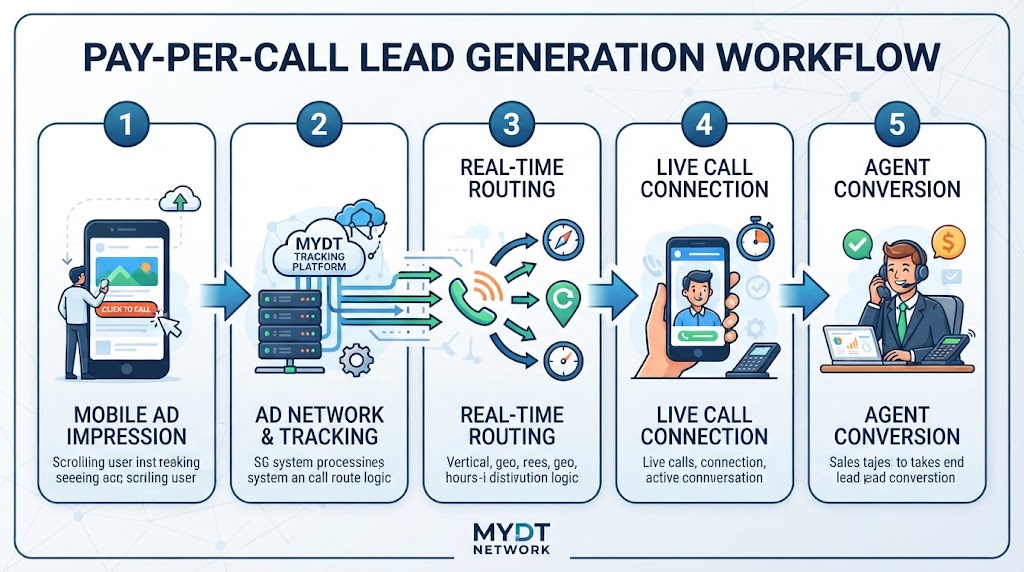
Modern platforms add IVR screening, real-time ping/post, call recording, and detailed reporting so both sides can manage quality and disputes with data rather than guesswork.
Why Pay-Per-Call Leads Convert Better Than Form Leads
The core advantage is intent and timing. A person who dials a number is usually further along the buying journey than someone who filled a form and closed the tab. Sales teams talk to a live prospect instead of chasing a record that may never answer.
Industry comparisons consistently show this gap. For a detailed side-by-side of pricing, conversion, and operational differences, see this breakdown of pay-per-call vs pay-per-lead differences. Operators who run both models also note that live calls reduce follow-up waste and improve speed-to-contact—see this practical operator’s guide to the two models for real-world tradeoffs.
| Factor | Pay-Per-Call Leads | Form / Data Leads |
| What you buy | Live inbound call | Contact record |
| Intent at handoff | Peak – already calling | Varies – often research |
| Contact rate | 100% (live on line) | Typically 40–60% |
| Best fit | Insurance, home services, legal | High-volume, lower-ticket offers |
Higher cost per lead is common with pay-per-call, but cost per acquisition is often lower because close rates are stronger and sales time is spent on live conversations instead of dialing.
Key Quality Filters for Pay-Per-Call Leads
Not every inbound call is worth buying. Strong programs use clear filters:
- Minimum duration (commonly 60, 90, or 120 seconds) to filter hang-ups and wrong numbers
- Geographic match so the caller is in a serviceable area
- Hours of operation alignment so calls arrive when agents can answer
- IVR or live screening questions that confirm basic intent and eligibility
- Exclusive vs shared routing—exclusive calls avoid multiple buyers competing for the same prospect
When these filters are transparent and enforced, both buyers and publishers can scale with confidence instead of fighting over disputed volume.
Common Mistakes When Buying Pay-Per-Call Leads
Even experienced buyers run into these problems:
- Accepting shared calls without knowing how many other buyers received the same lead
- Ignoring duration and screening rules until dispute rates climb
- Failing to match call volume to agent capacity—missed calls kill ROI
- Treating all verticals the same; payout and conversion profiles differ widely
- Overlooking TCPA and consent requirements that protect both the buyer and the program
Compliance is not optional. The FCC TCPA and unwanted communications rules set clear boundaries around autodialed calls, consent, and Do-Not-Call protections. Programs that ignore these rules create legal and reputational risk that no volume can justify.
A Practical Checklist Before You Scale
Use this short list before increasing volume:
- Written definition of a billable call (duration, geo, screening)
- Clear exclusive or shared terms
- Agent capacity matched to expected call volume and hours
- Call recording and reporting access for quality review
- Documented dispute process and payout terms
- TCPA and consent practices verified with the source
Where High-Intent Pay-Per-Call Fits in Your Mix
Pay-per-call leads work best when your team can answer live and when the lifetime value of a customer supports a higher cost per call. Insurance, home services, legal, and similar verticals have long used this model successfully because a single closed job or policy often justifies the acquisition cost.
Combined with clear qualification rules and reliable partners, pay-per-call becomes a predictable growth channel instead of a source of frustration.

Ready for High-Intent Leads That Convert?
Understanding pay-per-call leads is the first step. The next step is working with a partner that delivers real-time, TCPA-compliant, exclusive calls built for performance—not just volume.
Ready for high-intent leads that sales actually wants?