
If you have ever asked “what is a lead” after buying a batch of contacts that never converted, you are not alone. Most performance marketers have paid for lists that looked promising on paper and then watched sales teams waste hours on people who never intended to buy.
In today’s high-cost advertising environment, the difference between a real lead and a random contact can make or break your ROI. This guide gives you a clear, practical definition of what a lead actually is, how to separate high-intent prospects from noise, and the exact filters experienced operators use to protect budget and sales capacity.
No fluff. Just the definitions, frameworks, and checklists you need to stop chasing volume and start generating leads that close.
What Exactly Is a Lead in Marketing?
At its core, a lead is a person or business that has shown interest in what you sell and provided a legitimate way for you to contact them. That interest can appear as a form fill, a phone call to a tracking number, a resource download, or a quote request.
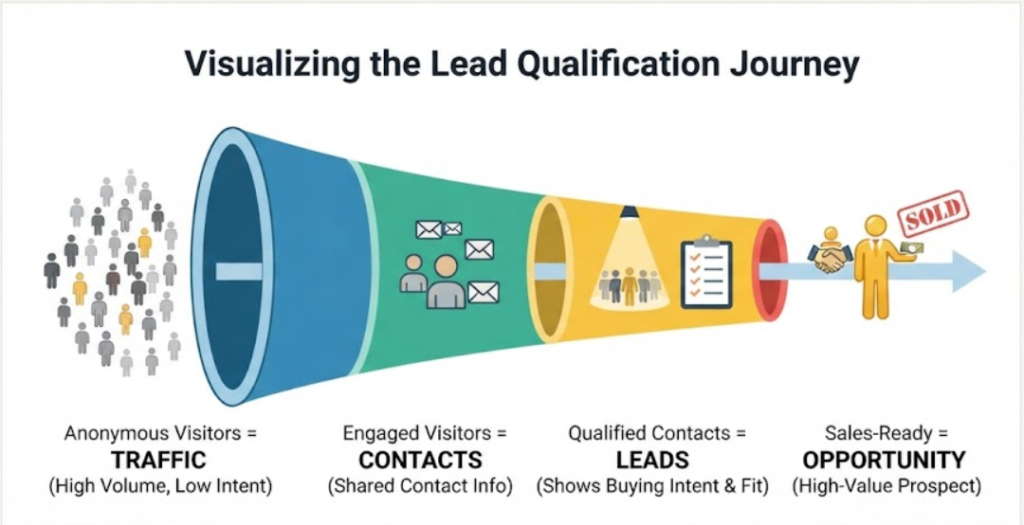
The critical distinction most teams miss: a lead is not just a contact record. A name and email in your CRM is data. A lead is data plus a reason—some signal that this person could become a customer. According to HubSpot’s definition of a lead, a lead has moved beyond anonymous traffic and given you permission to follow up.
Think of the progression this way:
- Anonymous website visitor = traffic
- Someone who leaves an email = contact
- Someone who leaves contact info and shows buying signals = lead
That distinction matters more than ever. Privacy rules, rising ad costs, and tighter compliance mean you cannot afford to treat every form fill like a sales opportunity. The teams that win define “lead” tightly and protect sales capacity for people who actually fit.
The Core Types of Leads You Will Encounter
Not every lead is created equal. Once you understand the basic definition of what a lead is, the next step is recognizing the different stages and quality levels that show up in real campaigns.
Cold Leads
These are contacts who match your target profile but have shown little or no active interest yet. They may come from a purchased list or a broad awareness campaign. Useful for long-term nurturing, almost never ready for an immediate sales call.
Marketing Qualified Leads (MQLs)
An MQL has engaged with your marketing in a meaningful way—downloaded a guide, visited pricing pages, attended a webinar, or filled a form that signals interest. They are warmer than cold leads but still need nurturing before most sales teams want them. We will break down the MQL vs SQL differences in detail in the next article of this series.
Sales Qualified Leads (SQLs)
These leads have been reviewed against clear criteria (budget, authority, need, timeline) and are ready for direct sales outreach. In high-performing operations, SQLs convert at dramatically higher rates than raw form fills.
Inbound Call Leads and Pay-Per-Call Leads
This is where intent gets real. A consumer dials a tracking number after seeing an ad or landing page. They are already on the phone, asking questions, often ready to book or buy. In verticals like insurance, home services, and legal, these live calls routinely deliver conversion rates far higher than form-based leads. That is why pay-per-call leads remain one of the highest-ROI models in performance marketing.
Why High-Quality Leads Beat Volume Every Time
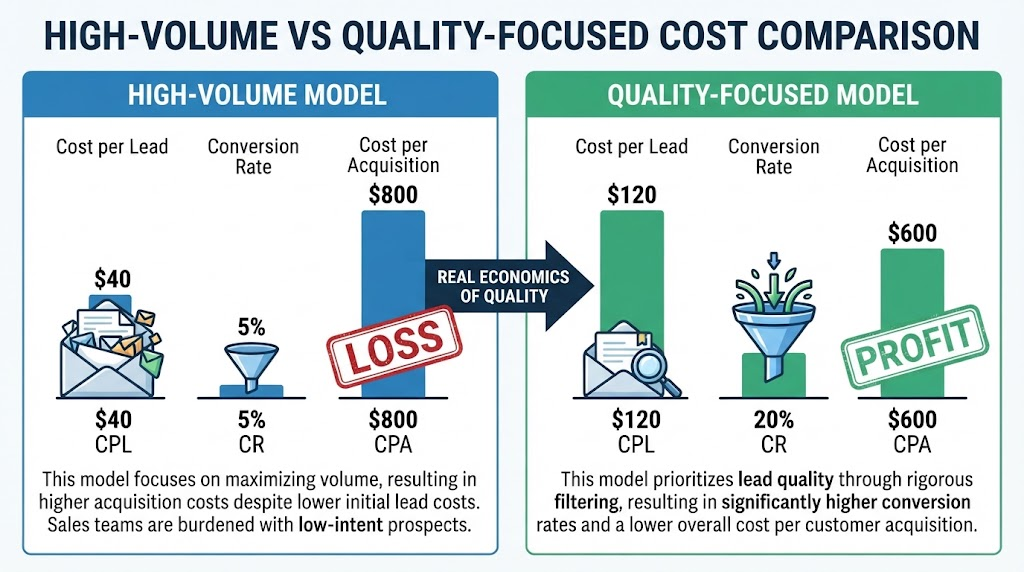
Here is the hard truth most dashboards hide: high lead volume with low quality is expensive theater. Industry data consistently shows the same pattern. High-volume, low-qualification models often convert lead-to-opportunity at under 5%. Quality-focused programs with clear scoring and intent filters regularly hit 15–30%. That gap compounds into shorter sales cycles and lower cost per acquisition. You can see similar industry benchmarks on lead conversion across major marketing research reports.
Consider this simple comparison:
| Metric | High-Volume Model | Quality-Focused Model |
| Cost per Lead | $40 | $120 |
| Conversion Rate | 5% | 20% |
| Cost per Acquisition | $800 | $600 |
The higher cost-per-lead model actually costs less to acquire a customer. That is the real economics of quality. Sales teams also spend far less time chasing dead ends, which improves both morale and capacity.
How to Tell If a Lead Is Actually Worth Following Up
You need a simple, repeatable filter. Most high-performing teams use some version of the following checks when deciding what is a lead worth sales time:
1. Fit with Your Ideal Customer Profile
Does this person or company match the demographics, firmographics, or need profile of customers who actually buy and stay? If not, the lead may still show interest, but it will rarely close profitably.
2. Clear Buying Intent Signals
Look for actions that go beyond passive interest: requesting a quote, calling a phone number, asking about pricing or availability, or comparing specific options. These signals separate browsers from buyers.
3. Contactability and Consent
Can you legally and practically reach them? Accurate phone numbers and clear opt-in matter. A lead you cannot contact is not a lead—it is a liability. Always follow TCPA compliance guidelines before any outreach.
4. Timing and Urgency
Is there a reason this person needs a solution now or soon? Emergency home services, expiring insurance policies, and time-sensitive financial needs convert faster than vague “just researching” inquiries.
Common Mistakes That Quietly Destroy Lead Quality
Even experienced teams fall into these traps when they lose sight of what a lead really is:
- Paying for shared leads that have already been sold to multiple buyers
- Accepting form fills with no verification or intent scoring
- Ignoring compliance requirements until a complaint or fine arrives
- Measuring success only by cost-per-lead instead of cost-per-acquisition or revenue
- Letting sales define “bad leads” without clear, written qualification criteria
Fixing these is usually more profitable than buying more traffic. Clean definitions and tight filters beat bigger budgets almost every time.
A Practical Lead Quality Checklist
Before you scale any lead source, run every campaign through this short checklist:
- We have a written definition of what counts as a lead for this vertical
- We know the difference between a contact, an MQL, and an SQL in our process
- We track intent signals (calls, quote requests, form depth) not just volume
- We verify consent and TCPA compliance before any outreach
- We measure cost per acquisition and close rate, not just cost per lead
- We have a clear path from lead delivery to sales follow-up with SLAs
Where High-Intent Lead Generation Fits In
Once you understand what a lead is, the next question is how to get more of them without drowning in noise. That is exactly the problem high-intent, real-time lead generation solves.
Modern performance partners focus on exclusive, verified, and often live-call leads that already carry buying intent. When the lead arrives with a phone call already in progress or a tightly filtered form submission, your sales team spends time closing instead of qualifying.
That shift—from volume to verified intent—is the difference between a lead generation program that feels expensive and one that becomes a predictable growth engine.
Key Takeaways
- A lead is more than a contact record—it is a person or business that has shown interest and given you a legitimate way to reach them.
- Quality consistently outperforms volume. Higher cost-per-lead often produces lower cost-per-acquisition when conversion rates are strong.
- Clear definitions (cold, MQL, SQL, call leads) prevent sales and marketing from talking past each other.
- Intent signals, fit, consent, and timing are the four practical filters that separate real opportunities from noise.
- Measuring only cost-per-lead hides the real economics. Track close rates and cost-per-acquisition instead.
Ready for Leads That Actually Convert?
Understanding what a lead is only solves half the problem. The other half is sourcing high-intent, compliant, exclusive leads that your team can close.
If you are ready to move beyond shared form fills and start working with real-time, TCPA-compliant lead generation built for performance, talk to the team that lives this every day.