Key Takeaways
- Call tracking attributes inbound phone activity to campaigns, pages, and partners so phone demand is no longer a black box.
- ROI improves when you measure the right events—connected and qualified calls—not number clicks alone.
- Without tracking, budgets drift toward form metrics while sales lives on conversations you cannot source.
- Pair clear event definitions with routing, speed-to-answer, and disposition feedback to turn data into decisions.
- Call tracking is infrastructure for accountable lead generation and pay-per-call programs—not a vanity dashboard.
If sales books jobs from the phone but media only optimizes form fills, your ROI picture is incomplete. Call tracking is the practice—and the tooling—of linking inbound calls to the ads, pages, keywords, and partners that caused them so you can spend against outcomes, not guesses.
Phone remains a high-intent channel in insurance, home services, legal, healthcare, and other considered purchases. Callers often want answers now. When those calls are untracked, high-performing campaigns look average, weak sources hide inside “brand” or “direct,” and partner quality debates stay subjective.
This guide defines call tracking in plain terms, explains why it changes return on ad spend and lead spend, and shows how operators should read the metrics. For implementation detail in performance programs, see how call tracking works in lead generation. For choosing systems, see our framework on call tracking software for lead generation.
What Call Tracking Actually Means
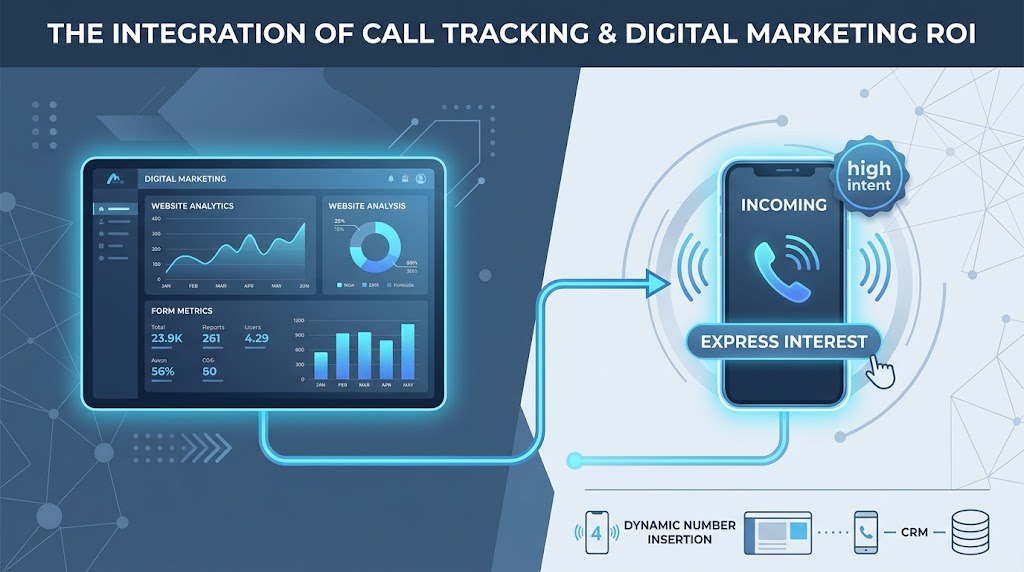
Call tracking assigns unique or dynamically swapped phone numbers to marketing sources, then logs when those numbers ring, whether someone answers, how long the call lasts, and—when configured—what the outcome was. The goal is attribution: connecting a conversation to a cause.
Static numbers work for offline partners, print, or simple channel splits. Dynamic numbers swap on websites or landing pages so session-level or campaign-level detail is possible. Both approaches count as call tracking when the mapping from source to call record is reliable.
Tracking is not the same as a softphone, a full contact center suite, or a CRM. Those systems may integrate with tracking, but the core job of call tracking is source-level accountability for inbound phone demand.
Why Call Tracking Matters for ROI
ROI is a ratio: value created relative to cost. If a large share of value arrives by phone and you cannot assign cost to those calls, the ratio is fiction.
Stop Underfunding What Actually Converts
Search themes and landing pages that drive calls often look expensive on cost-per-lead if “lead” only means form submit. Once call volume and close rates are included, those same themes can be the best spend in the account. Tracking makes that visible.
Stop Overfunding Empty Volume
Cheap form traffic that never becomes a conversation drains budget and sales time. When phone outcomes are measured, you can cut sources that inflate inquiry counts without producing qualified talks.
Hold Partners to the Same Standard
In pay-per-call and multi-publisher programs, tracking and dispositions decide whether a call is billable. Shared definitions plus tracked numbers reduce disputes and protect margin for buyers and sellers.
Exclusivity and response speed still matter after the phone rings—see exclusive leads vs shared leads for how delivery models change conversion odds once demand is real.
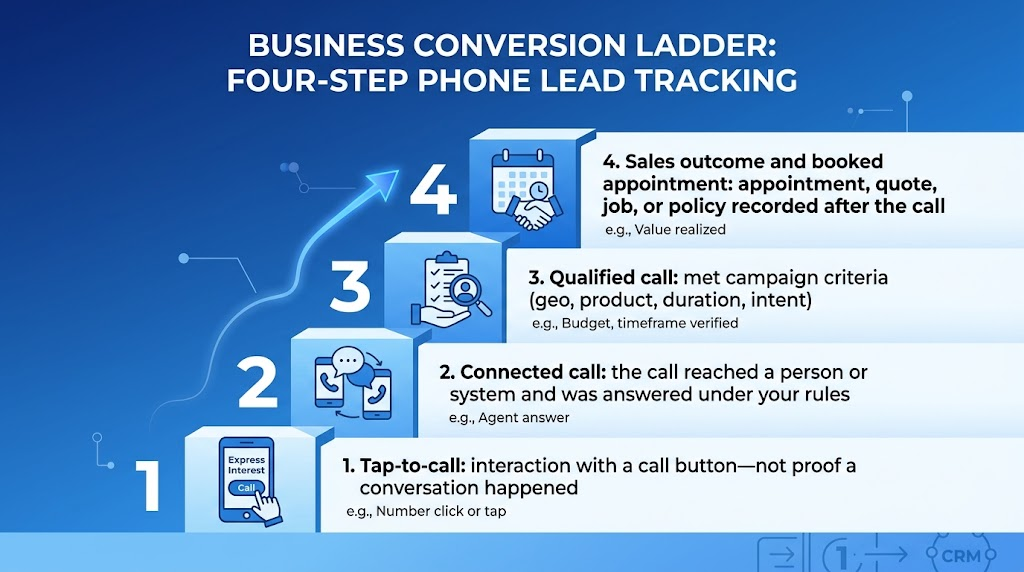
The Event Ladder: What You Should Measure
Not every phone-related metric is equal. Confusing them destroys ROI analysis.
- Number click or tap-to-call: interaction with a call button—not proof a conversation happened
- Connected call: the call reached a person or system and was answered under your rules
- Qualified call: met campaign criteria (geo, product, duration, intent)
- Sales outcome: appointment, quote, job, or policy recorded after the call
Google Ads documentation on phone call conversion tracking distinguishes several call-related conversion types. Use platform options carefully, and keep your internal unit economics tied to the events you actually pay sales to work.
How Call Tracking Improves Day-to-Day Decisions
Data only helps when teams act on it.
Media and Content
Shift budget toward campaigns and URLs with strong cost per qualified call. Refresh pages that attract form spam but few rings. Align landing copy with the promise that made someone dial.
Sales and Operations
Route high-intent sources to trained agents. Staff peak hours when tracked demand spikes. Coach openers using source context so the first thirty seconds match what the caller requested.
Finance and Leadership
Report pipeline value with phone included. Compare channels on cost per booked outcome, not only cost per form. Defend or cut spend with evidence instead of anecdotes.
Common Gaps That Kill ROI Gains
- Tracking installed but qualified-call definition never written down
- Number pools too small, causing recycled attribution errors
- Calls answered slowly so tracked demand abandons before value is created
- No disposition feedback from sales to media
- Optimizing to call volume while ignoring close rate by source
Tracking reveals problems; process fixes them. Software selection still matters—routing, integrations, and reporting fit are covered in the Day 15 software guide—but definitions and SLAs are not optional extras.
Call Tracking in a Full Performance System
Strong programs combine intent-aware traffic, tracked numbers, qualified routing, CRM outcomes, and weekly source reviews. Human conversation remains a trust advantage when the caller is ready to decide. Call tracking is how that advantage becomes measurable instead of mythical.
Stage discipline still helps across form and phone paths. Practical funnel thinking from resources such as HubSpot’s lead generation guide reinforces clear definitions from interest to customer—extend those definitions to include phone events explicitly.
Getting Started Without Overbuilding
Week 1: Write definitions for connected, qualified, and sold. Map top landing pages and campaigns that should carry tracked numbers.
Week 2: Implement tracking on those properties. Verify test calls show the correct source.
Week 3: Share a simple weekly scorecard with media and sales: calls, qualified rate, cost per qualified call by source.
Week 4: Move a meaningful budget decision based on the scorecard. Document what you changed and why.
That loop—measure, decide, document—is how call tracking becomes ROI infrastructure rather than another unused login.
Call tracking also protects creative quality. If a landing page promises emergency service and the call connects to a generalist who cannot help, ROI collapses after the ring. Source data lets you fix message match, not only media bids.
Organizational habits matter as much as software. Assign an owner for the weekly call scorecard. Put qualified-call cost next to form CPL in the same meeting. When leadership sees both, budget debates get shorter and more honest.
Finance teams often distrust marketing ROI until phone is included with the same rigor as e-commerce checkout. Bring them a simple model: spend by source, qualified calls, close rate, average revenue per close. Even directional models beat slide decks that stop at cost per click.
Partner and affiliate call programs multiply the need for clean definitions. When multiple publishers share a vertical, source-level tracking and shared qualification rules keep payouts fair. Without them, the loudest anecdote wins and the best traffic sources get underpaid or cut by mistake.
Privacy and notice requirements sit beside measurement. Call recording, whisper messages, and data retention policies should match the jurisdictions you serve. Tracking that improves ROI while creating compliance exposure is not a win—coordinate with counsel when programs span multiple states or industries.
Attribution on mobile browsers and app-to-call journeys can be noisier than desktop form funnels. Dynamic number insertion, click-to-call buttons, and paid search call extensions each behave differently. Test the paths your audience actually uses instead of assuming one tracking method covers every scenario.
Offline and hybrid paths still need attention. Missed calls, voicemails, and booked callbacks carry intent that pure “answered live” metrics ignore. If your market rings after hours, tracked demand without an after-hours path understates ROI potential and frustrates callers who were ready to buy.
ROI conversations fail when teams mix time windows. A call that happens today may close next week. Decide whether weekly reviews optimize to qualified calls while monthly reviews roll up closed revenue, and label reports accordingly. Mixing leading and lagging indicators in one column creates false alarms and false confidence.
In competitive verticals, the operators who know which keywords and partners produce bookable conversations compound advantages quietly. Competitors still arguing from form CPL alone will misallocate spend. That information edge is the practical ROI case for call tracking.
Documentation keeps ROI gains from evaporating during staff changes. Maintain a short runbook: event definitions, number assignment rules, report owners, and escalation contacts. Call tracking programs decay when only one analyst understands the taxonomy.
Advanced teams eventually connect call outcomes to lifetime value or repeat jobs. Start simpler: qualified call and first close are enough to beat no phone attribution at all. Add sophistication when the basic loop is trusted.
When results disappoint after tracking launches, resist the urge to blame the tool first. Validate number pools, confirmation of source tags on test calls, answer-rate by hour, and whether sales marks dispositions consistently. Most “tracking does not work” tickets are process gaps.
Multi-location brands should avoid blended scorecards that hide weak sites. A strong national CPC with weak local answer rates is an operations problem, not a media win. Break reports to the level where someone can act—store, region, or team.
Seasonality changes the ROI story. Peak service months may justify higher cost per qualified call because close rates and job values rise. Off-season may require tighter thresholds. Track performance by month and by campaign type so you do not apply a single annual average to every decision.
Call tracking will not fix a weak offer, slow follow-up, or misaligned geo targeting. It will show those problems faster. The ROI comes from acting on the signal—cutting waste, funding winners, and staffing the moments when buyers call.
Executive sponsors should ask one recurring question in performance reviews: what share of pipeline value last month arrived by phone, and which sources produced it? When that question is expected, teams keep tracking healthy without reminders.
Training closes the last mile. Agents who understand why a call is labeled high intent treat it differently than a random inbound. Share weekly examples of sources that convert and scripts that match those intents. Measurement without coaching leaves money on the table after the phone is already ringing.
Integration quality affects ROI speed. If qualified-call flags never reach the ad platform or CRM, humans must bridge the gap with spreadsheets. That lag slows optimization cycles. Prioritize clean postbacks for the two or three systems you use every day before you chase exotic features.
Think of call tracking as the phone equivalent of UTM discipline. You would not evaluate paid social without campaign parameters; treating inbound calls as untagged “direct” is the same error with higher stakes when each conversation can be worth hundreds or thousands in revenue.
Define the events, instrument the paths, review the scorecard, and move the money. That is what call tracking is—and why it matters for ROI in lead generation and pay-per-call programs that live or die on real conversations.
That sequence prevents expensive software from sitting idle while debates continue in the dark. Call tracking earns its keep when it changes a decision you would have made differently without it.
For teams new to phone attribution, success in the first quarter looks like this: stable source tags on test and live calls, a shared qualified-call definition, weekly cost-per-qualified-call by channel, and at least one budget shift justified by that report. Everything else—advanced multi-touch models, conversation intelligence, complex routing trees—can follow once the foundation is trusted.
That alignment is the quiet advantage behind durable performance programs.
Treat phone demand with the same accountability you already apply to forms and checkouts—and your ROI reporting finally matches how customers actually buy.

Ready for Tracked Inbound Demand That Sales Can Work?
Call tracking answers which sources produce conversations worth having. Pair it with high-intent lead generation and clear qualification rules so phone ROI is earned, not assumed.
Ready for high-intent leads that sales actually wants?