
Key Takeaways
- High-intent leads are contacts already closer to a buying decision—not every form fill or accidental click.
- They convert better when product match, geography, and timing align with how your sales team works.
- Volume without intent inflates cost per opportunity; intent without capacity wastes demand.
- Evaluate sources on contact rate, conversation relevance, and next-step rates—not lead count alone.
- Pair high-intent demand with exclusive handling, speed-to-contact, and clear qualification.
Not every name in the CRM is equal. High-intent leads are the ones already moving toward a decision—comparing options, requesting a quote, or asking to speak with someone now—not people who clicked an ad by accident or chased a freebie.
Sales teams feel the difference immediately. Cold contacts drain dialer time and morale. Purchase-ready contacts create conversations that can become appointments, policies, or jobs. That gap is why cost-per-lead alone is a dangerous scoreboard: cheap volume often hides expensive distraction.
This guide defines high-intent leads in practical terms, explains why they convert at higher rates, shows how to recognize and filter for them, and outlines how buyers should measure sources after delivery. It is written for operators in lead generation and performance channels who need clearer language between media and sales—not slogans.
What High-Intent Leads Actually Are
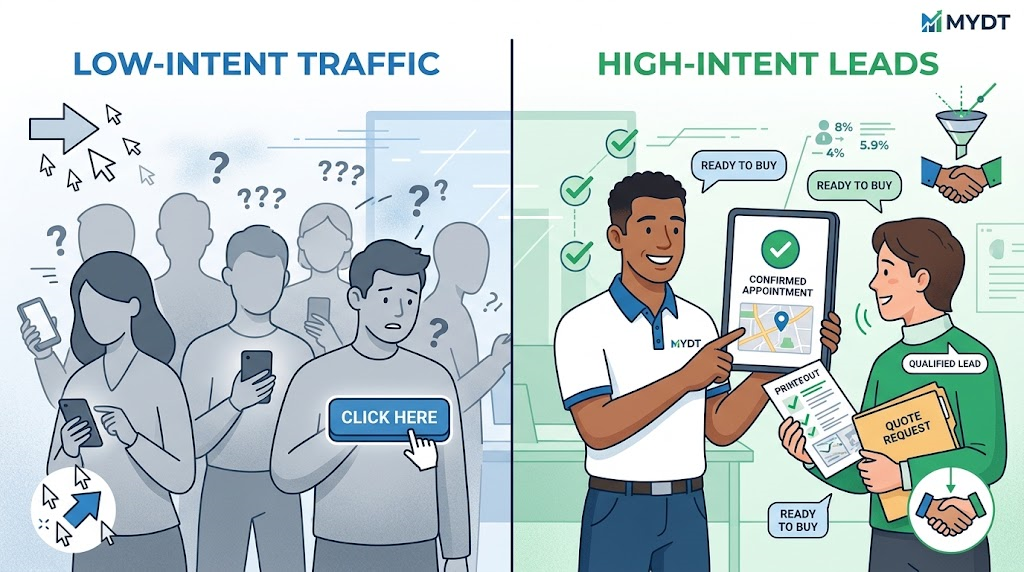
A high-intent lead is a person who has shown behavior consistent with near-term interest in a specific product or service, and who can realistically be contacted and worked by your team. Intent is inferred from actions—search language, form answers, call context—not from hope.
Contrast that with low-intent or cold contacts: reward hunters, wrong-product inquiries, out-of-area requests, or people who never expected a phone call. Those records may still be “leads” on a rate card. They are not the same asset.
If you need the foundational definition of a lead itself, start with our complete guide to what a lead is. High intent sits on top of that definition: it is a quality filter, not a replacement for basic contact data.
Marketing and sales often disagree because they use different stage labels. Mapping intent to qualification stages—such as the difference between marketing-qualified and sales-qualified contacts—keeps the conversation honest. See our breakdown of MQL vs SQL for how teams separate early interest from sales-ready opportunity.
Why High-Intent Leads Convert Better
Conversion improves when the buyer’s timing and the seller’s offer overlap. High-intent contacts are already in that overlap more often than cold traffic.
Less Education, More Decision
Cold prospects need category education. High-intent prospects often need fit, price, availability, or trust. Sales conversations shorten when the person already knows they need coverage, a repair, or a quote.
Higher Contact and Show Rates
People who requested a call or submitted a detailed form are more likely to answer and to show for appointments—provided your team responds quickly and the request was accurately described.
Clearer Economics
When you measure cost per appointment or cost per closed deal, high-intent sources frequently look better even at a higher cost per lead. The expensive lead that books beats the cheap lead that never answers.
Intent is not magic. A high-intent inquiry for the wrong product, wrong state, or outside business hours still fails. Match and capacity remain part of the system.
How to Recognize High-Intent Signals
Use observable signals—not gut feel alone.
- Query and message language: words like quote, price, near me, emergency, enroll, or specific product names
- Form depth: product type, location, timeline, and contact preference completed accurately
- Channel context: inbound calls and live transfers often carry stronger intent than passive content downloads
- Behavioral path: multiple relevant page views or return visits before submit (when you can measure them)
No single signal is perfect. Combine filters: geo + product + explicit request to be contacted. Then validate with post-delivery outcomes.
For vertical application in insurance—where purchase-phase demand is especially valuable—see our strategy on high-intent lead generation for insurance. The same intent logic applies across other considered purchases.
Buying and Working High-Intent Leads
Acquisition and operations have to match.
Exclusivity and Speed
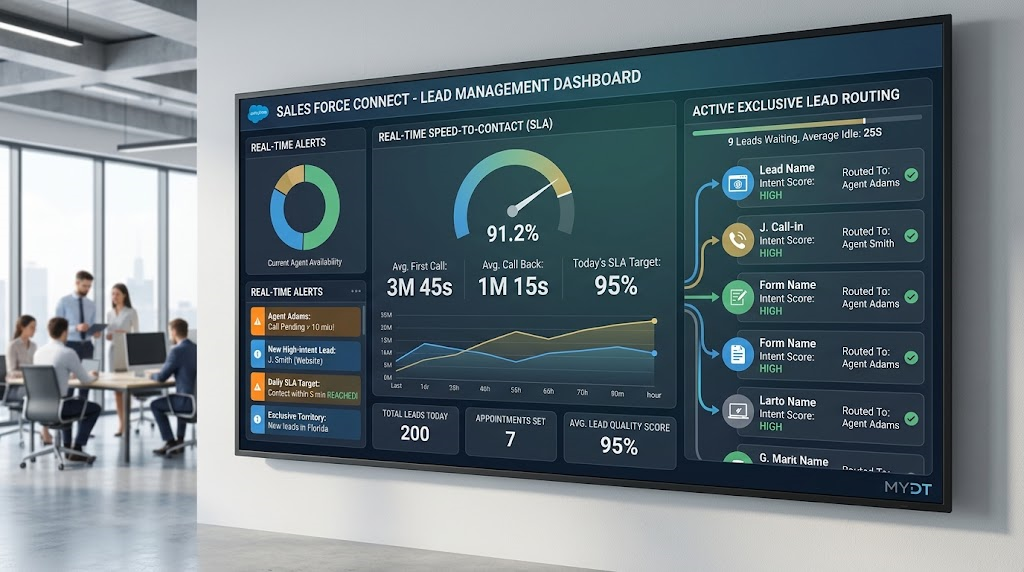
Shared high-intent leads still create a race. Exclusive delivery gives your team a cleaner window. Speed-to-contact—minutes, not hours—protects the intent you paid for. Our comparison of exclusive leads vs shared leads explains how delivery models change real conversion odds.
Clear Definitions Before Scale
Write down what counts as valid, matched, and sales-ready. Align media, vendors, and sales on the same definitions. Otherwise “high intent” becomes a marketing label with no operational meaning.
Feedback Loops
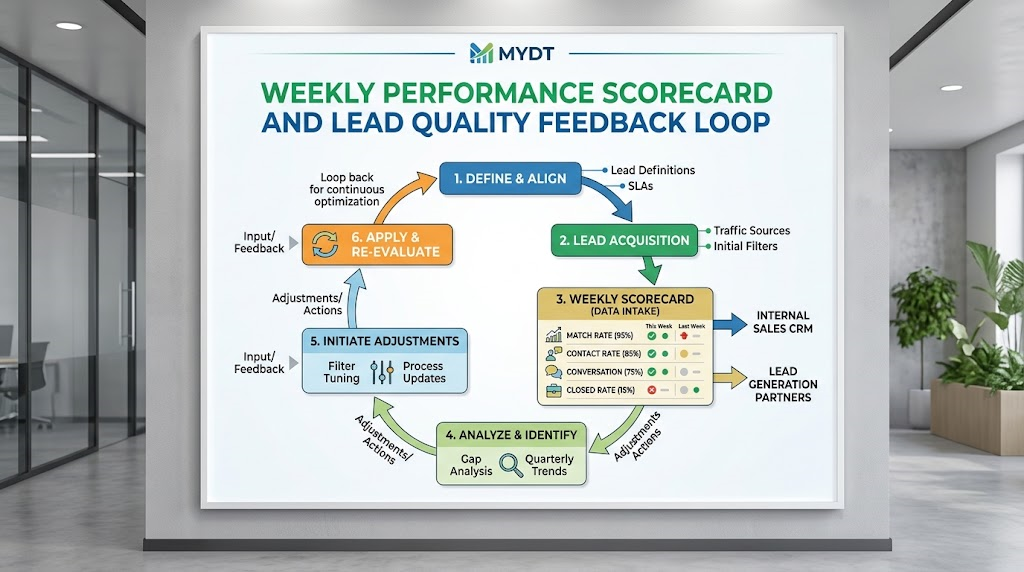
Return outcomes to the source: wrong product, no answer, booked, sold. Sources improve only when they see what sales sees.
Stage frameworks from practical resources such as HubSpot’s lead generation guide help teams keep inquiry-to-customer language consistent—then overlay your product, geo, and compliance filters.
How to Measure Whether “High Intent” Is Real
Do not accept the label. Test it.
- Match rate: product and service area correct
- Contact rate within your SLA
- Conversation matches the original request
- Next-step rate: quote, appointment, or application
- Closed rate and cost per closed outcome by source
Compare sources on the same outcome definition and the same time window. A channel that wins on clicks is answering a different question from one that wins on customers. When you review cost per action, keep cost and conversion counts in the same scope—platform average CPA definitions illustrate the formula; your internal unit economics still decide which source deserves budget.
Common Mistakes That Kill High-Intent Performance
- Buying more volume than agents can work the same day
- Treating every form submit as high intent without filters
- Ignoring exclusivity while blaming “lead quality”
- Optimizing only to CPL instead of cost per appointment or sale
- Never feeding dispositions back to media or vendors
Fix process before you switch vendors. Many “bad lead” problems are slow follow-up or fuzzy definitions.
Building a High-Intent System—Not a One-Off Purchase
Sustainable programs combine: intent-aware media, qualification questions, delivery rules that match consent and capacity, trained responders, and weekly scorecards. Media DT focuses on high-intent demand for performance partners because conversation quality—not vanity volume—is what stabilizes growth.
Start with one product line and one clear definition of success. Pilot with full tracking. Scale only after contact and next-step rates clear your bar. That discipline is what turns high-intent leads from a buzzword into a managed pipeline.
Finally, treat high-intent as a system: media selection, filters, exclusivity, speed, training, and measurement. Fixing only the traffic source while ignoring response time or definition drift produces temporary lifts that fade as volume grows. Operators who manage the whole path keep conversion stable when competitors only buy more names.
Portfolio thinking helps. Not every channel will be high intent. Use cheaper awareness or retargeting where it supports the funnel, but do not let those volumes set the quality standard for your core paid opportunities. Scoreboards should separate intent tiers so budget follows outcomes.
Sales coaching multiplies high-intent value. Agents who open with the product and location the person requested waste fewer seconds and earn more trust. Share sample notes from top sources in weekly huddles so the team treats strong demand with full effort instead of generic scripts.
When testing a new source, fix definitions first: valid lead, matched lead, contacted, next step. Run a pilot with capped volume and full CRM tagging. Two weeks of disciplined dispositions usually reveal more than months of mixed, untracked buying. Scale only after the numbers clear your thresholds.
Compliance sits beside intent. Clean consent and documentation protect your ability to contact people who asked to hear from you. Intent without a defensible contact basis is not a durable asset—especially in regulated verticals. Build the consent path into the same system that captures product and geo filters.
Creative and landing experience still matter. A high-intent search sent to a generic page that hides product details or asks irrelevant questions suppresses conversion and creates mismatched expectations on the first call. Message match from ad to page to opener is a quality control step, not a design luxury.
High-intent programs also change how you staff. If media delivers evening and weekend demand, someone must answer then. Buying purchase-ready contacts into an empty queue converts high intent into abandoned intent within hours. Align answering hours and estimate capacity with the traffic pattern you pay for.
In short: high-intent leads convert because the person is closer to a decision and your team is prepared to meet them there. Protect that advantage with filters, exclusivity, speed, and measurement. That is how intent becomes revenue instead of another CRM segment that nobody trusts.
Publishers and media partners benefit from the same honesty. Traffic that cannot support high-intent claims should not be sold as such. Buyers who insist on outcome reporting raise the quality of the whole market. Shared scorecards beat shared blame.
Technology supports the system but does not replace it. CRM fields, call tracking, and routing tools only help when qualification rules and SLAs are written down. Buying more software without settling definitions adds cost without adding clarity.
Intent labels should be audited, not trusted forever. Vendors and channels drift. Seasonal demand shifts. What was high intent last quarter can dilute if filters loosen to hit volume goals. Schedule monthly reviews of match and contact rates by source, and document any change in lead definitions so historical comparisons stay valid.
Geography and licensing constraints deserve explicit filters in every high-intent program. National campaigns that ignore service area and carrier or trade appetite create leads that look strong on paper and unworkable in practice. Require geo precision in delivery rules and reject volume that cannot meet those rules consistently.
High-intent lead generation is not a campaign theme. It is an operating standard: only pay for demand your team can convert, only scale what the scorecard supports, and only trust labels that survive contact and close data. Meet that standard consistently and sales will stop treating new leads as a gamble.
Document wins the same way you document failures. When a source produces exceptional appointment rates, capture creative, geo, hours, and script notes so you can replicate the pattern. Institutional memory is a competitive advantage in lead generation.
When leadership asks for more pipeline, answer with capacity and quality together. More high-intent leads without more trained responders is not a growth plan—it is a backlog plan. Tie media ramps to hiring and shift coverage so the intent you buy can be worked.
Use a simple weekly ritual: pull source-level match, contact, and next-step rates; cut or fix the bottom quartile; expand the top quartile only when capacity exists. Ritual beats heroics. Teams that wait for a quarterly crisis to examine lead quality always pay more for the same lesson.
Define intent clearly, measure it after delivery, and scale only what your team can work. High-intent leads then stop being a buzzword and start behaving like predictable pipeline.
That standard is what Media DT builds programs around for partners who care about conversation quality as much as top-of-funnel volume.
If your current sources cannot clear contact and next-step benchmarks, fix filters and follow-up before you increase spend. Volume multiplies whatever system you already have—including the broken parts.
Build toward that standard one definition, one source review, and one capacity-aligned budget decision at a time.
High-intent is the standard insurance, home services, and other considered-purchase verticals deserve: fewer tire-kickers, more conversations with a real path to close.
That is the difference between filling a CRM and filling a calendar with work your team can close.
Choose the second path—and measure it every week.
Your sales team will notice the difference before the dashboard does.
Ready for High-Intent Leads Sales Will Actually Work?
High-intent leads convert because timing, relevance, and sales capacity line up. If you want demand filtered for real conversations—not just form volume—the next step is a direct fit discussion.
Ready for high-intent leads that sales actually wants?