
Key Takeaways
- SaaS affiliate programs pay when commission structure, cookie window, and your traffic intent match—not when the headline percentage looks highest.
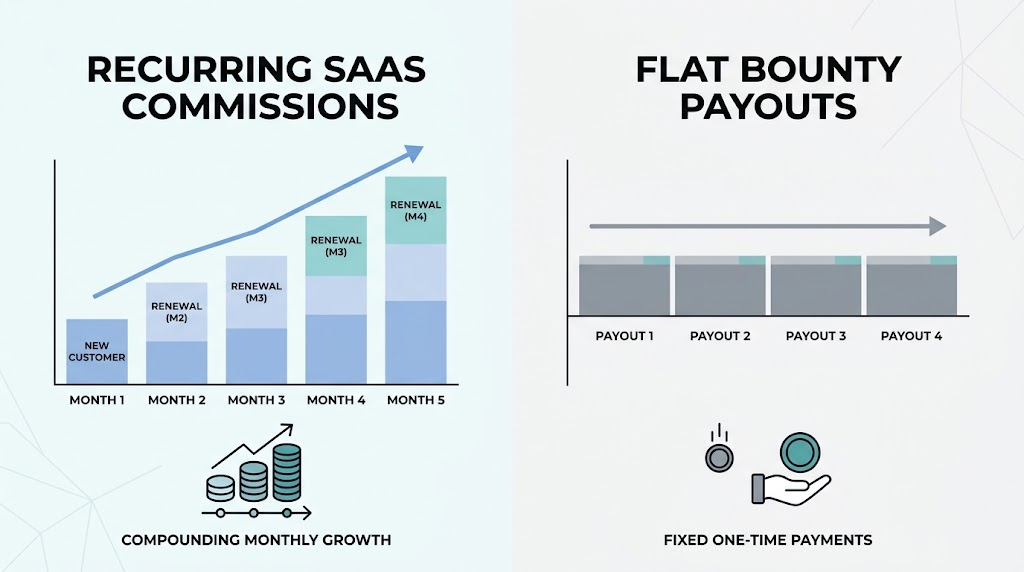
- Recurring commissions compound; flat bounties are easier to model but rarely build long-term EPC on their own.
- Compare offers on the same basis: payout type, attribution window, conversion event, and approval rules.
- Tools in call tracking, CRM, email, and landing pages often fit performance publishers better than random software directories.
- Always verify live terms in the official partner portal—public lists go stale fast.
A long list of SaaS affiliate programs is not a strategy. Publishers lose months promoting tools with weak cookie windows, unclear conversion events, or audiences that never buy software—then wonder why “50% commission” produced almost nothing.
SaaS offers can be excellent for affiliates and media partners: higher average order values than many consumer products, recurring revenue potential, and clear product stories. They can also be traps when you optimize for the rate card instead of for matched intent, realistic attribution, and approved earnings.
This guide shows how to choose SaaS affiliate programs that actually pay in practice. You will get a selection framework, the difference between recurring and bounty models, how to read cookie and conversion terms, which product categories tend to fit performance traffic, and a checklist before you scale. Commission examples below are illustrative of common market structures; always confirm live terms with the program.
Why Most SaaS Affiliate Lists Fail Publishers
Directories make research faster. They do not replace due diligence. Three problems show up repeatedly.
- Stale rates: Public commission figures change; yesterday’s 40% may be today’s 20% or invite-only.
- Wrong traffic fit: A high payout on enterprise HR software does nothing if your audience buys consumer tools—or only generates insurance calls.
- Opaque conversion events: “Per customer” can mean trial, paid month one, or paid after a long sales cycle. Without the definition, EPC is fiction.
Treat every list as a starting inventory. Your job is to filter for programs where your traffic, the product’s buyer journey, and the payout mechanics can align.
If you already monetize performance traffic through CPA and EPC discipline, the same habits apply here. Our masterclass on CPA marketing and traffic monetization covers how to separate advertiser cost metrics from publisher earnings—skills you need when SaaS programs quote both percentage shares and flat bounties.
The Selection Framework: Five Questions Before You Promote
Answer these in writing for every program you consider. If any answer is vague, the offer is not ready for scale.

1. What Event Pays?
Trial start, demo request, first paid invoice, or qualified lead? Each event has a different conversion rate and a different dispute profile. Prefer programs that state the event in plain language and define invalids.
2. Is Payout Recurring, Flat, or Hybrid?
Recurring commission (for example, a percentage of subscription for 12 months or for the customer lifetime) rewards retention and can compound. Flat bounties (fixed dollars per signup or per paying customer) are easier to forecast per conversion but do not grow with the account. Hybrids—flat plus residual—are common in B2B SaaS.
3. How Long Is the Attribution Window?
B2B software decisions often take weeks. A seven-day cookie is hostile to content-led affiliates; 60–90 days or longer is more realistic for considered purchases. Also ask whether tracking is cookie-only or supports server-side / click-ID persistence, because browser limits can shrink effective windows on mobile.
4. Does Your Audience Buy This Category?
Map the program to your actual traffic: marketers, agencies, founders, local service businesses, or insurance-focused publishers. A call-tracking or landing-page tool may convert on performance marketing audiences; a niche dental EMR may not.
5. What Are Approval, Lock, and Payment Terms?
Net-30 after lock, high reversal rates, or manual creative approval can kill cash flow. Read the fine print before you build content around the brand.
Recurring vs Bounty: How to Compare Apples to Apples
Headline percentages mislead when models differ. Normalize before you rank offers.
| Factor | Recurring % | Flat Bounty |
| Cash timing | Builds over months | Faster per conversion |
| Best when | Retention is strong; you can wait | You need clear CPA-style math |
| Main risk | Churn cuts residual; terms may cap months | No upside if account expands |
Illustrative market patterns (not guarantees): many email and marketing tools advertise 20–50% recurring for a limited period; some CRM and sales tools use 15–30% revenue share; call tracking and communications tools often use flat bounties per paying customer or qualified lead. Always pull the live IO.
When you model earnings, use approved conversions and your realistic conversion rate—not the program’s best-case marketing page. The same discipline you use for
average CPA on the advertiser side applies in reverse as a publisher: know the formula, match the scope, and do not confuse a target with a result. See Google Ads: Average CPA definition for how platforms formalize cost-per-action math—then build your own EPC sheet with approved earnings over clicks.
Categories That Often Fit Performance and Lead-Gen Traffic
Not every SaaS vertical is equal for publishers coming from performance marketing, lead generation, or local services media.
Call Tracking and Attribution
Tools that track inbound calls and lead sources sit close to how many performance teams already work. Flat bounties per new customer or percentage of subscription can both work when your content teaches measurement. Pair education with product fit—readers who care about how call tracking works in lead generation are warmer than cold software shoppers.
Landing Pages and Conversion Tools
Builders and testing tools align with media buyers who already live in funnels. Recurring commissions on subscription tiers are common. Your advantage is practical tutorials, not generic “best of” posts.
CRM, Email, and Sales Engagement
Large categories with constant demand—and constant competition. Win with niche angles (agencies, local service operators, specific verticals) rather than another broad CRM roundup.
Where Fit Is Weaker
Highly specialized vertical software (narrow healthcare EMRs, niche manufacturing ERPs) can pay well per deal but convert poorly unless your audience is already that buyer. Do not force-fit.
Phone-led monetization remains a parallel path. Some publishers blend SaaS affiliate income with pay-per-call leads when traffic is high-intent and local. Different models; same rule—match offer to intent.
A Practical Checklist Before You Scale a SaaS Offer
- Conversion event is defined in writing (trial, paid, qualified lead)
- Payout model and duration (recurring months vs lifetime vs flat) are confirmed in the portal
- Cookie / attribution window fits a realistic sales cycle for that product
- Audience match is honest—not aspirational
- Creative and trademark rules are acceptable for your channels
- Payment threshold, lock period, and reversal policy are tolerable
- You have a tracking plan (UTMs, subIDs, deep links) before traffic starts
Run a small test with full tracking before you commit a content series or paid media. Scale only after approved earnings—not clicks—clear your bar.
Stage discipline still applies across any monetization path. Frameworks such as HubSpot’s lead generation guide reinforce clear definitions from interest to customer—definitions you should mirror when a SaaS program pays on “leads” versus “paying customers.”
How to Build Content That Converts for SaaS Affiliates
Software buyers research. Thin affiliate posts rank poorly and convert worse. Prefer:
- Problem-led guides that mention tools only where they solve a step
- Comparison tables with criteria you actually tested or can document
- Setup walkthroughs and use-cases for a defined audience
- Honest limitations—when the tool is not the right fit
Avoid copying feature lists from vendor sites. Add operational judgment: who should buy, who should not, and what to measure in the first 30 days. That is what earns trust and residual commissions.
Keep compliance in mind for any traffic that also involves lead forms or outbound contact in regulated verticals. SaaS affiliate income and lead-generation businesses can coexist; they should not share careless data practices.
Putting It Together: A Simple Portfolio Approach
Serious publishers rarely run one SaaS offer. They run a small portfolio:
- One or two core tools deeply covered in content (highest effort, highest trust)
- A few adjacent tools for comparison and upsell paths
- Occasional bounty offers for campaigns that need faster cash conversion
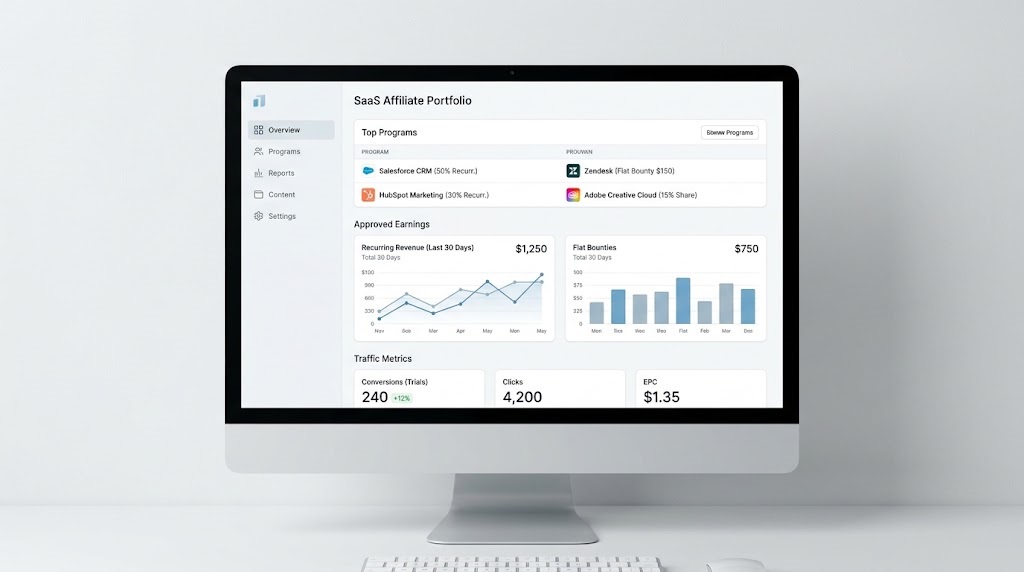
Review the portfolio monthly: approved earnings, reversal rate, and content decay. Cut programs that consume creative time without approved revenue. Double down where EPC is stable.
Data in public roundups—including any spreadsheet of programs—should be treated as research input, not as a live contract. Rates, cookie terms, and eligibility change. Your source of truth is the partner dashboard on the day you promote.
Finally, keep a living shortlist rather than a frozen spreadsheet. Re-validate top programs every quarter: rate changes, cookie changes, and product-market shifts. The publishers who treat SaaS affiliate as a managed portfolio outperform those who treat it as a one-time listicle project.
Team workflow should mirror performance media habits: name campaigns clearly, pass sub-IDs, review approved earnings weekly, and kill content that attracts clicks without customers. SaaS affiliate is still performance marketing—it just settles on subscription logic instead of pure CPL.
Geographic and segment eligibility matter more than publishers admit. Some programs pay only on specific countries, company sizes, or plan tiers. Sending global traffic into a US-only bounty wastes spend. Read eligibility before you open campaigns.
Reversal and refund behavior changes true EPC. A program with strong headline commissions and high month-one churn or aggressive refund policies can underperform a quieter offer with stable retention. Ask for historical approval rates when possible, and track your own reversal percentage by offer after the first cohorts mature.
Creative compliance is not optional. Many SaaS brands restrict trademark bidding, require pre-approved copy, or ban certain claims about pricing. Violations can void commissions. Build a simple folder of approved assets and refresh dates so media buyers and writers do not improvise claims that reverse later.
Cookie and attribution details deserve a second pass on mobile-heavy traffic. Browser restrictions can shorten effective cookie life even when a program advertises 30 or 90 days. Prefer programs that support durable click IDs or server-side postbacks when your audience research cycle is long. If the program cannot explain how attribution survives a multi-day B2B journey, model earnings conservatively.
Choose fewer programs and go deeper. Ten shallow promotions almost always lose to three well-supported tools with real tutorials, honest comparisons, and ongoing updates. Depth is the unfair advantage in SaaS affiliate.
Hybrid businesses—those running both lead generation and affiliate—should separate reporting. Do not blend SaaS commission revenue with lead-gen CPL in a way that hides which channel is actually working. Separate dashboards keep strategy honest.
Paid media affiliates need faster feedback loops. Flat bounties and shorter sales cycles are easier to optimize under CPA constraints. Recurring SaaS can still work in paid if trial-to-paid rates are strong and you have cash runway for residual lag.
Content-led affiliates should prioritize programs with educational depth—tools you can demonstrate, compare, and critique. Pure bounty offers with no product story rarely support durable SEO pieces. Match the monetization model to the content model you are willing to sustain.
When you evaluate a new program, spend one focused hour on the partner portal before writing a single paragraph of content: download terms, note the conversion event, screenshot the commission schedule, and test a tracking link end-to-end. That hour prevents weeks of misaligned promotion.
Start with the five questions, run the checklist, and only then build the content or campaigns that earn the commission.
That is how SaaS affiliate programs move from a spreadsheet of promises to a managed line of approved earnings.
Ready to Pair Software Offers with High-Intent Demand?
SaaS affiliate programs that actually pay are the ones you select with the same rigor you apply to any performance offer: clear events, honest audience fit, and measurable approved earnings. If your broader growth plan also needs high-intent lead flow—not only software commissions—bring both conversations to the same table.
Ready for high-intent leads that sales actually wants?