
Key Takeaways
- Lead generation for home services works when intent, exclusivity, and speed-to-contact are aligned—not when CPL is minimized in isolation.
- Roofing, HVAC, plumbing, and windows respond best to local, high-intent demand with clear service-area filters.
- Exclusive and pay-per-call models often outperform shared leads on appointment and close rates for contractors.
- Measure sources on contact rate, appointment set rate, and jobs booked—not form volume alone.
- Settle qualification rules, answering hours, and feedback loops before you scale any channel.
Home service companies do not lose jobs because they lack skill. They lose jobs when the phone stays quiet—or when it rings with tire-kickers who never book. Effective lead generation for home services is about matching real local demand to crews that can show up, estimate, and close—not filling a CRM with names that never answer.
Roofing after a storm, HVAC before summer peaks, plumbing emergencies, window replacements—each vertical has different urgency and seasonality. What they share is simple: the consumer often wants a conversation or a site visit, not another email sequence. That makes phone-capable, geo-filtered, exclusive opportunities especially valuable.
This guide covers what actually works for home services lead generation: which channels tend to produce bookable jobs, why exclusivity and speed matter, how to evaluate sources beyond cost per lead, and the operational habits that keep ROI stable. The focus is practical—built for owners and marketing managers who measure success in appointments and closed jobs, not vanity form counts.
What Home Services Lead Generation Really Requires
At a practical level, lead generation for home services means identifying homeowners (or property managers) with a near-term need and connecting them to a contractor who can serve that ZIP code. The “lead” is not the form alone. It is a contact opportunity with enough intent and location data for a productive first call or booking.
Home services differ from pure insurance quote funnels in scheduling reality. A roofing lead that cannot be inspected this week may go to a competitor. An HVAC lead at 6 p.m. when nobody answers becomes a missed job. Capacity and answering hours are part of the acquisition system.
Quality also depends on service match. A windows inquiry sent to a plumbing company is not a bargain—it is wasted dispatch time. Filters for service type and service area are non-negotiable if you want agents and office staff to trust the pipeline.
If you are still clarifying exclusive versus shared delivery economics, the same logic that applies across performance channels applies hard here: shared home services leads often trigger multiple contractors calling the same homeowner within minutes. That race compresses conversion and damages brand experience. See our breakdown of exclusive leads vs shared leads for the operational differences that show up in appointment rates.
Channels That Commonly Work for Home Services
No single channel owns the category. Strong programs mix sources and judge each one on cost per booked job.
High-Intent Search and Local Landing Pages
Search captures active demand: “roof repair near me,” “AC not cooling,” “emergency plumber.” Landing pages that ask for address or ZIP, service type, and preferred contact method improve downstream booking rates. The tradeoff is competitive CPC in many metros. Tracking which queries produce calls and appointments—not only form fills—is essential.
Pay-Per-Call and Live Transfers
When a homeowner is ready to talk, a live transfer or inbound call often outperforms a form that sits in a queue overnight. Pay-per-call models charge for connected conversations, which aligns cost with contact opportunity. Quality still depends on how traffic is sourced, how geo is enforced, and how quickly your team answers. For the model fundamentals, see what pay-per-call leads are.
Exclusive Digital Leads
Exclusive home services leads go to one buyer. That window matters when the consumer is comparing two or three contractors the same evening. Higher cost per lead is often offset by higher appointment and close rates when your team responds fast and follows a clean estimate process.
Attribution completes the picture. If you cannot tie a call or form back to campaign and later to a booked job, you cannot tell which channel deserves budget. Our guide on how call tracking works in lead generation explains number pools, dynamic insertion, and the logging path contractors need for honest ROI.
Why Speed and Exclusivity Decide Home Services ROI
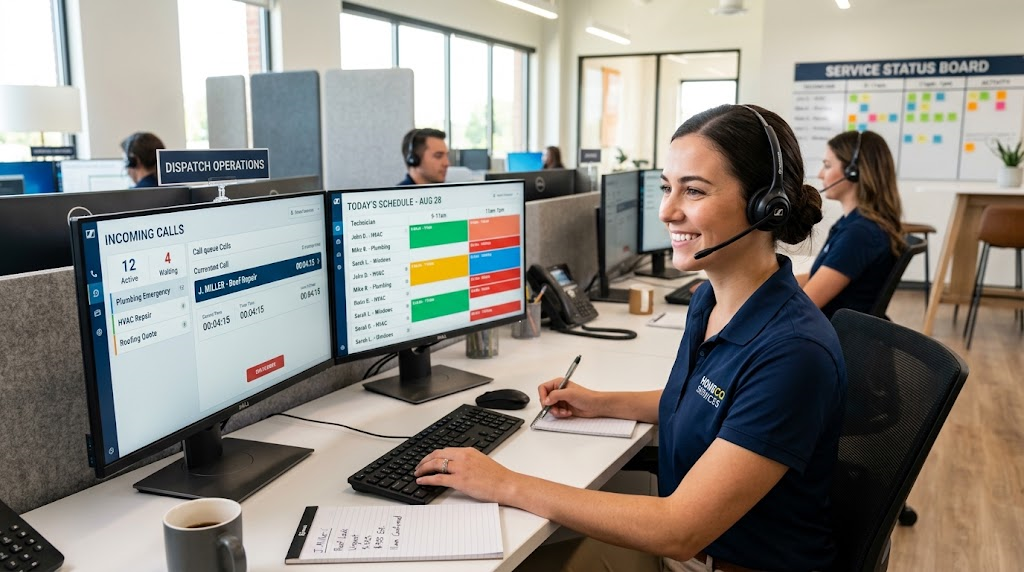
Homeowners rarely wait. Storm damage, a broken water heater, or a failed AC unit create urgency. The first professional who answers clearly and offers a realistic next step often wins the job—even if a second contractor has a slightly better price later.
Shared leads force a race. Exclusive delivery gives your office a cleaner chance to set the appointment. Speed-to-contact SLAs—minutes, not hours—should be written into both media planning and staffing. Buying evening media without evening coverage is how high-intent demand becomes a missed opportunity.
ROI math must include labor. A cheap shared lead that consumes three outbound attempts and never books can cost more than an exclusive lead that books on the first call. Track cost per appointment and cost per closed job by source, not only cost per lead.
Broader conversion discipline still helps. Frameworks such as HubSpot’s lead generation guide reinforce stage thinking—inquiry, contact, qualified opportunity, closed job—that home services teams can mirror in their CRM fields.
How to Evaluate Home Services Lead Sources
Use a short scorecard before you scale any vendor or campaign.
- Can the source filter by service type and exact service area?
- Is the lead exclusive to you, or shared with a defined number of other contractors?
- What is the real contact rate within your SLA window?
- What share of contacts become appointments, and what share of appointments become jobs?
- How are invalids, wrong-service, and out-of-area returns handled in writing?
- Does call tracking or CRM integration attribute outcomes back to source?
Cheap volume with weak geo filters looks efficient until dispatch drives across town for a job you do not perform. Expensive exclusive volume can look expensive until cost per closed job is calculated. Always finish the math.
For industry context on how homeowners search and hire for local work, established home-services marketplaces and research from major platforms (for example, resources published by Angi) illustrate the competitive reality contractors face—multiple options, fast decisions, and high expectations for responsiveness.
Operational Habits That Keep Jobs Flowing
Source quality is only half the equation. How the office works the opportunity determines whether good demand becomes revenue.
Staff to the Hours You Buy
If media runs nights and weekends, someone must answer. Overflow to a trained answering service with clear booking scripts is better than voicemail. Unanswered high-intent calls train the market to call someone else.
Script the First Two Minutes
Confirm service type, address or ZIP, urgency, and preferred appointment window before launching into a long pitch. Capture those fields in the CRM so the estimator continues the same conversation.
Feed Outcomes Back Weekly
Review contact rate, appointment rate, and close rate by source every week. Cut sources that look cheap but never book. Expand sources that book steadily even at a higher CPL.
Seasonality is real. Roofing spikes with weather. HVAC peaks with temperature extremes. Build flexible budgets so you can raise spend when qualified appointment rates are strong and pull back when capacity is full.

Building a Durable Home Services Lead Mix
Mature contractors rarely rely on one channel. A durable mix often includes:
- A core of exclusive or pay-per-call volume for predictable appointments
- High-intent search on proven local keywords with strong landing pages
- Referral and partner relationships for high-trust jobs
- Careful testing of new sources at low volume before scale
The goal is not maximum lead count. The goal is a repeatable cost per closed job that supports crew capacity and margin. When capacity is constrained, exclusivity and quality matter more than filling the board with maybe-jobs.
Document definitions of valid lead, appointment, and closed job so every vendor conversation uses the same language. Ambiguity in definitions is how budget leaks into disputes instead of completed work.
Finally, treat home services acquisition as a system: media quality, exclusivity, speed-to-contact, estimate process, and post-job review all have to move together. Fixing only the lead source while ignoring answer rates or definition drift produces temporary lifts that fade as volume grows.
Training remains a quiet multiplier. Office staff who understand the traffic source and the homeowner’s likely urgency open stronger. Share sample call notes from top-performing sources in weekly huddles. When the team knows why someone inquired, they waste fewer seconds on generic openers and more on booking the right window.
When evaluating a new source, run a controlled pilot with fixed volume, fixed SLAs, and pre-agreed definitions of valid lead and appointment. Two weeks of disciplined CRM tagging usually reveals more than months of mixed, untracked buying. Scale only after contact and appointment rates clear your thresholds.
Compliance and consumer trust sit beside the numbers. Recording policies, TCPA-aware follow-up rules, and clear identification on outbound calls protect both the brand and long-term channel access. Shortcuts here create expensive problems later.
Creative and offer alignment deserve the same rigor as media buying. If the ad promises emergency roof tarping and the first available appointment is ten days out with no interim option, callers hang up and quality scores suffer. Review the path from ad copy to landing message to phone script as one continuous experience.
Home services lead generation also rewards honest capacity planning. Buying more concurrent opportunities than office staff and crews can handle creates abandoned intent and inflated cost per booked job. Match media throttle to answering capacity and estimate slots, then expand both together. A smaller book of well-worked leads almost always beats a larger book of missed calls.
Put simply: lead generation for home services succeeds when intent, geography, exclusivity, and capacity are designed as one system. Start with the constraints you actually have—crew size, licensed trades, service radius, and answering hours—and demand sources that respect those constraints. That is how contractors turn acquisition into predictable pipeline instead of another expensive experiment.
Document wins and losses the same way. When a source produces exceptional appointment rates, capture the creative, geo, and time-of-day pattern so you can replicate it. When a source fails, write down the failure mode—wrong service, wrong hours, weak answer rate—so the next test does not repeat it. Institutional memory is a competitive advantage in local services.
Technology choices should follow process. CRM fields, call tracking numbers, and booking calendars only help when qualification definitions and response SLAs are already written. Buying more software without settling those definitions adds cost without adding clarity.
Partner and referral channels should sit alongside paid acquisition, not as an afterthought. Real estate agents, property managers, and insurance adjusters can send high-trust work when relationships are maintained. Track those sources with the same rigor you apply to paid leads so you know which relationships deserve more time.
Vertical nuance still matters inside home services. Roofing after hail behaves differently from planned window replacement. Emergency plumbing tolerates less delay than a non-urgent HVAC tune-up. Build separate filters and creative where the urgency profile differs, rather than forcing one generic “home services” funnel to do every job.
That is the standard this category deserves: not more names on a list, but more appointments that crews can complete and that finance can trust.
When those pieces align, home services lead generation stops feeling like a lottery and starts behaving like a managed growth channel—one you can forecast, improve, and defend in every budget meeting.
Build the system once, measure it weekly, and scale only what books real work.
Ready for Home Services Leads Your Crews Can Work?
Home services growth depends on conversations that turn into appointments and jobs. High-intent, geo-filtered, exclusive or call-based delivery designed for real capacity is how you stop paying for noise.
Ready for high-intent leads that sales actually wants?