
- HVAC leads only pay off when geo, job type, and response speed match dispatch capacity.
- Prioritize repair and replace intent over soft “estimate someday” volume.
- Calls and high-intent search often beat cheap shared forms in this vertical.
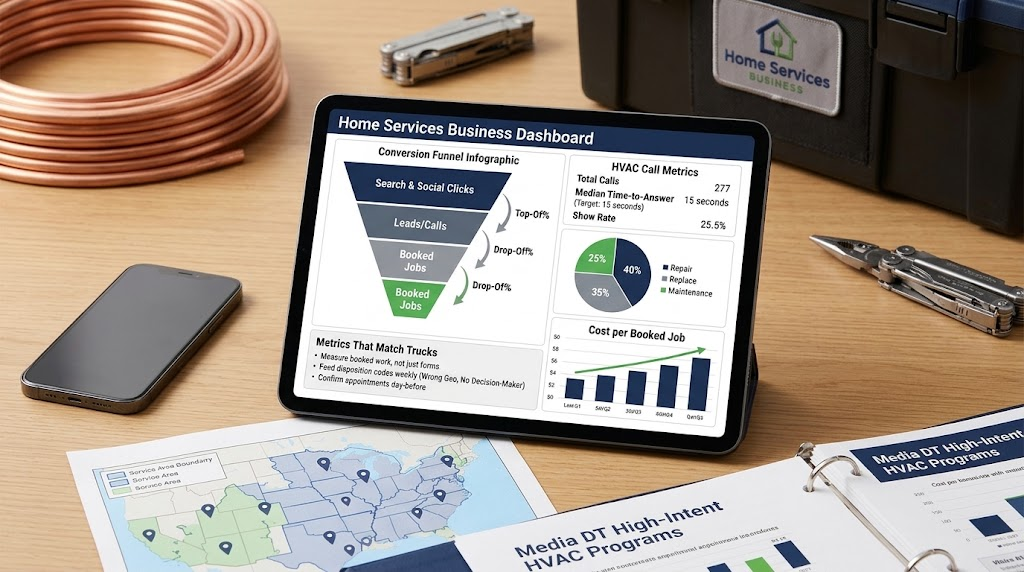
- Measure cost per booked job and show rate, not CPL alone.
- Media DT supports high-intent HVAC demand when filters stay explicit.
HVAC leads are expensive for a reason: homeowners call when heat fails, AC dies, or a system is at end of life. If your generation method ignores urgency, service area, and phone behavior, you will pay contractor rates for tire-kickers.
This playbook covers how to generate demand that can close, how to qualify before a truck rolls, and which metrics actually matter. It builds on general home-services lead practice without repeating a full channel encyclopedia. For the broader home-services lead context, see lead generation for home services.

What a Workable HVAC Lead Looks Like
Before you buy or build volume, write the acceptance bar:
- In your service zips.
- A real job type you sell: repair, replace, maintenance, or new install.
- A reachable phone number and a time window you can answer.
- Homeowner or decision-maker status when that matters for quotes.
Anything outside that list is marketing inventory, not a dispatch-ready lead. Train CSRs to confirm zip and job type in the first minute.
Where HVAC Demand Actually Comes From
| Source | Best for | Common failure |
| Paid search | Urgent repair / replace intent | Broad match, wrong geos |
| Google Business / local | Nearby trust + calls | Untracked calls, weak reviews |
| Pay-per-call / click-to-call | Phone-first homeowners | No after-hours plan |
| Shared lead networks | Fill gaps at lower unit price | Multi-shop dialing, stale data |
| Exclusive / filtered partners | Controlled volume | Higher CPL without SLA |
Start with intent and phones. Shared form dumps are a secondary lever only after you can score them on booked jobs. When call products are part of the mix, align definitions with what pay per call leads are so invoices match what sales counts as workable.
Generation Rules That Protect Margin
Geo and job-type fencing
Hard-exclude zips you cannot staff. Split emergency repair from planned install when budgets allow. One campaign for “HVAC near me” and furnace install will waste money on both.
Seasonality without panic buying
Heat waves and cold snaps spike demand and CPC. Raise capacity and answer rates before you only raise bids. Buying more leads into a full board creates cancels and bad reviews.
Offer honesty
If the ad promises same-day and dispatch cannot deliver, you bought a complaint, not a job. Match creative to real windows. Homeowners also research efficiency and replacement timing from public resources such as Energy Star’s heating and cooling guidance. Your landing page should answer practical next steps—not copy government content.
Closing the Lead: From Inquiry to Booked Job
Speed-to-lead
HVAC shoppers call the next company when the first rings out. Set a median time-to-answer target and name an overflow path. After-hours voicemail without a callback SLA turns paid demand into morning leftovers.
Script that qualifies without killing urgency
- Confirm address or zip.
- Confirm system issue or project type.
- Confirm timing need (today, this week, planning).
- Book the window or schedule a qualified callback.
Do not run a ten-minute product lecture before you know the job exists.
Estimate and close discipline
Track show rate and close rate by source. A source with cheap CPL and no-shows is not cheap. Feed disposition codes weekly: wrong geo, no decision-maker, price-only shopping, duplicate. Confirm the appointment the day before when the cycle allows it. No-show reduction is often cheaper than buying more top-of-funnel leads.
For replacement quotes, send a short pre-visit checklist: system age, access to equipment, decision-makers present. Better visits raise close rate without more media spend. If financing is part of your close, say so early on high-ticket replace leads. Surprise payment friction after a truck roll wastes paid demand.
Metrics That Match Trucks
Report weekly side by side:
- Lead or call volume by source.
- Contact rate / answer rate.
- Booked jobs.
- Show rate and close rate.
- Cost per booked job.
If CPL falls while cost per booked job rises, generation is not working—it is filling the board with noise.
Buying HVAC Leads from Partners
Put in writing:
- Paid event (form, qualified call, exclusive vs shared).
- Required fields and geo list.
- Credit rules for bad contact data and clear out-of-area.
- Cap aligned to dispatch capacity.
Pilot two to four weeks. Expand only when cost per booked job clears your bar. Do not scale on CPL screenshots alone.
Repair vs replace vs maintenance: different lead economics
Emergency repair leads convert on speed and availability. Replacement leads need clearer scope, financing talk, and often a second touch. Maintenance plans are lower urgency and should not share the same bid strategy as no-heat calls. If one source sends mostly “tune-up special” shoppers into a board built for emergency capacity, acceptance will look bad even when the vendor is honest about the traffic type. Label campaigns by job family.
Replacement tickets often carry higher revenue and longer sales cycles. Judge those sources on booked estimates and closed jobs over a longer window, not on same-day connect rate alone.
CSR and technician feedback that improves buying
Weekly, pull the top three reasons jobs were not booked. If “outside service area” repeats, fix geo at the source the same week. If “already had three quotes,” reduce shared inventory or tighten exclusivity.
Technicians see bait-and-switch promises first. When they report ad claims the company cannot meet, pause that creative before you pause the whole channel. Record a sample of inbound calls. Patterns beat opinions when you renegotiate with a lead partner.
Capacity math before media math
Count how many new estimates or service calls each tech day can absorb. Buy up to that number plus a small buffer. Overflow without staffing is how “lead quality” becomes a stand-in for “we were slammed.”
On peak weather days, prioritize answer rate and existing customers with live failures over net-new soft leads. Generation spend should flex with the board, not fight it.
Where Media DT Fits
Media DT delivers high-intent lead generation and inbound call programs for performance buyers in home services verticals, including HVAC when geo and job filters are explicit. Strong fit when you staff the phone and measure booked work. Weak fit when the brief is unlimited cheap forms with no acceptance standard.
HVAC Lead Checklist
- Service map and job types written down.
- Answer path and after-hours owner named.
- Sources ranked by cost per booked job.
- Reject codes live in the CRM or call notes.
- Partner contracts mirror the same filters and credits.
Generate only what you can close. That is the whole game in HVAC.
Keep a simple weekly scoreboard visible to marketing and dispatch. Shared numbers end more arguments than shared opinions. When those two teams agree on the unit economics, HVAC lead spend becomes a controllable input instead of a seasonal fight. That is the standard worth defending before the next heat wave or cold snap hits your market next.
Review one source change at a time. Stacked bid, creative, and partner changes in the same week hide what improved booked-job cost.
Book the Job, Not the Form
HVAC leads work when intent, area, and response line up. Build or buy to that standard, then scale what books.
Explore high-intent lead and inbound programs with Media DT.
Bring service-area maps, job-type lists, and peak-season capacity numbers so any pilot matches what dispatch can actually run.
What makes an HVAC lead workable?
In-area zip, a job type you sell, a reachable phone, and a response window you can actually staff.
Are shared HVAC leads worth buying?
Only as a capped fill after you score them on booked jobs. Multi-shop dialing often destroys contact rates.
Which metric should replace vanity CPL?
Cost per booked job, plus show rate and close rate by source.
Why do summer/winter spikes create “bad leads”?
Often capacity and answer-rate failures, not only source quality. Match buy volume to the board.
How does Media DT fit HVAC?
High-intent leads and inbound calls with explicit geo and job filters for teams that measure booked work.
Need HVAC demand dispatch can run?
Media DT delivers high-intent leads and inbound calls with clear geo and job-type filters—so spend follows booked jobs, not empty form volume.
Explore high-intent programs with Media DT