
Forms fill pipelines. Live conversations close policies. That is why pay per call (PPCall) remains one of the highest-intent channels in performance marketing—especially in insurance, home services, and other categories where trust is built by voice, not by another unread email.
A phone-number click is not a connected call. A connected call is not automatically a qualified call. A qualified call is not automatically a sale. Teams that collapse those stages into one vanity metric misallocate budget and argue over reports that were never measuring the same event.
This guide explains why inbound voice still converts, how to measure the full call journey without mixing stages, how Media DT structures inbound success, what publishers should expect when monetizing traffic through PPCall, and which questions to settle before launch. The aim is practical clarity—so buyers and publishers optimize the same reality.
The Immediacy of Inbound Calls
Email and SMS have their place in nurture sequences. Nothing replaces the speed and nuance of a live phone conversation when a consumer is ready to act. In insurance especially, trust is the primary currency. A skilled agent can answer objections, confirm coverage needs, and move a prospect toward a quote in minutes—something a form confirmation email rarely achieves alone.
Pay per call captures that moment. Instead of paying only for a submitted form that may never answer the phone, buyers pay for the opportunity to speak with someone who initiated contact. That alignment between cost and conversation is why PPCall payouts often sit well above pure click or shared form economics.
Immediacy cuts both ways. If the call rings into voicemail, an untrained agent, or a queue with no capacity, the intent evaporates. Successful PPCall programs treat answering speed and agent readiness as part of the product—not as an afterthought after media is purchased.
For a foundational overview of the model itself—definitions, buyer and publisher roles, and how payable calls are structured—see our complete guide on what pay-per-call leads are. This article builds on that foundation with measurement discipline and launch readiness.
Measure the Whole Call Journey
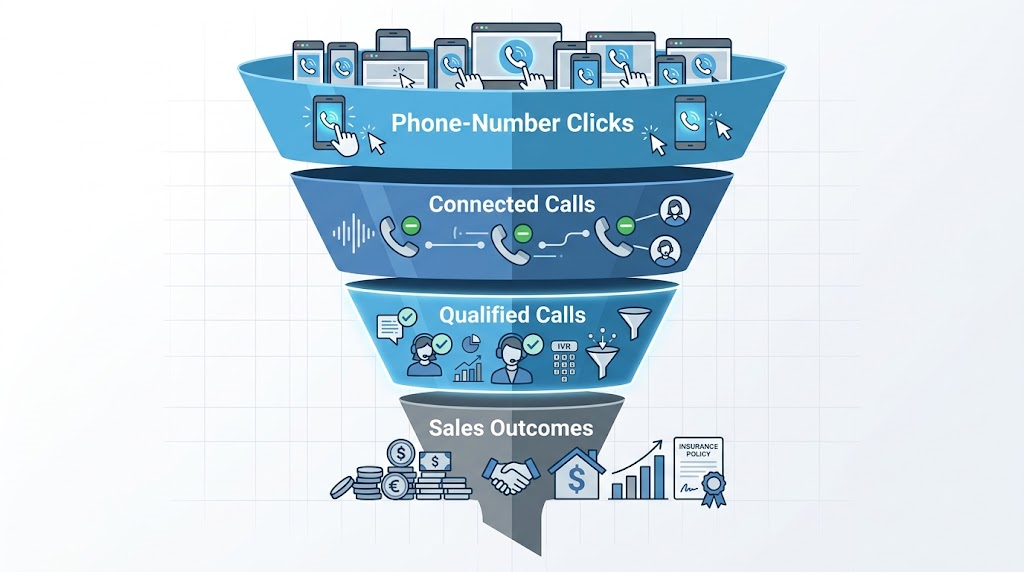
Clean reporting starts by naming each stage. A phone-number click, a connected call, and a qualified call are different events. Define what each report measures before comparing campaigns, and record later sales outcomes separately.
Phone-Number Clicks
Record interaction with a call button or link. Do not automatically treat each click as a connected conversation. Mobile users often tap a number and abandon before the call connects. Counting every tap as a “lead” inflates volume and deflates true contact rates.
Connected Calls
Check whether the call reached the intended destination and was answered. Connection and answer are operational facts. They confirm that media and routing worked; they do not yet prove commercial qualification.
Qualified Calls
Apply the criteria agreed for the campaign—duration thresholds, service match, geography, IVR filters, or agent disposition—rather than assuming that any answered call qualifies. Qualification rules should live in writing before the first dollar of traffic is spent.
Sales Outcomes
Record what happened after the call so a tracking event is not automatically counted as a sale. Quote requests, applications, and issued policies belong in CRM stages that sit downstream of the call event.
Advertising platforms offer their own call measurement options. Google Ads, for example, distinguishes several types of phone call conversion tracking—including calls from ads, calls to a website number, clicks on mobile numbers, and imported call outcomes. These are platform measurement choices, not a universal definition of a payable call. For the official overview, see Google Ads: About phone call conversion tracking. Always map platform conversions back to your campaign’s contractual definition of a qualified call.
Attribution infrastructure matters as much as definitions. If you cannot tie a call to its source campaign and later outcome, optimization stays guesswork. Our guide on how call tracking works in lead generation walks through number pools, dynamic insertion, and the logging path that makes source-level decisions possible.
How Media DT Drives Inbound Success
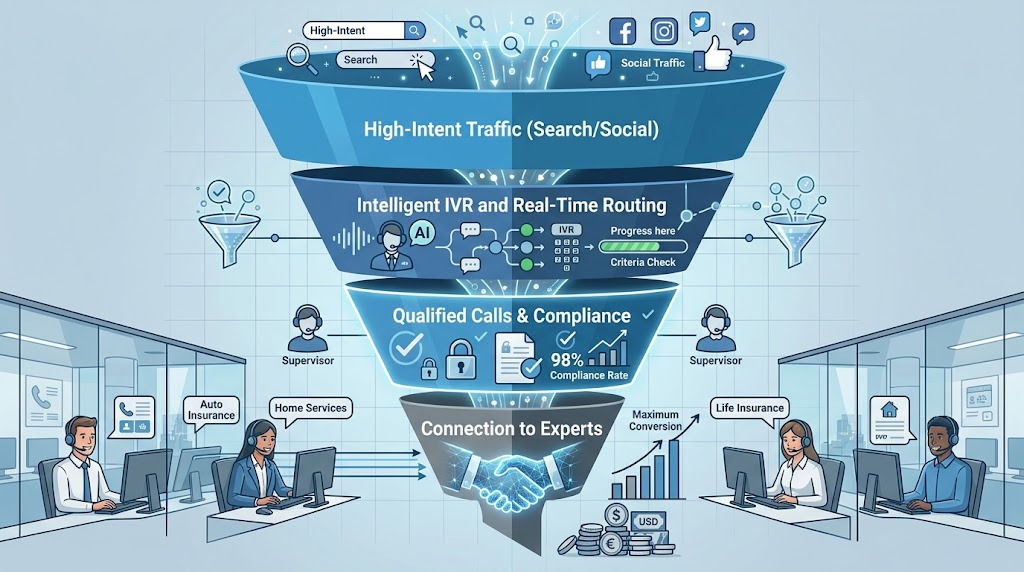
We specialize in generating inbound calls through high-intent search and social channels, with routing and verification designed for buyers who need conversations—not just click counts.
- Direct connection: When a user is ready for insurance or a related service, click-to-call shortens the path from intent to agent.
- Verified intent: IVR and qualification filters help confirm the caller is seeking the service the campaign promotes before the call is treated as billable.
- Real-time routing: Technology routes the call to available agents quickly so intent is not lost in hold music or unanswered rings.
Inbound success is a joint product of media quality, technical routing, and buyer-side answering capacity. No amount of high-intent traffic compensates for a phone tree that drops callers. No amount of agent talent compensates for traffic that never matched the offer. PPCall programs that scale cleanly align all three.
Vertical nuance matters. Insurance callers often need licensed agents, specific coverage types, and compliant handling of personal information. Home services callers may need appointment windows and local dispatch. Campaign setup should reflect those realities rather than a one-size template.
Monetizing Traffic with Pay Per Call
For publishers, PPCall can deliver some of the highest payouts in performance marketing. Instead of earning fractions of a cent to a few dollars per click, qualified calls in competitive verticals can pay in meaningful dollar amounts per accepted conversation.
That upside comes with stricter expectations. Traffic must match geo, intent, and often device or creative rules. Call duration, IVR completion, and rejection policies affect what actually pays. Headline payout without approval rate is not a forecast.
Media DT sits between high-quality publisher traffic and premium buyers—especially in insurance—where intent, compliance posture, and routing quality determine whether a call is valuable. Publishers who treat PPCall like generic link arbitrage usually discover the hard way that vertical detail is the product.
Compare accepted calls and resulting earnings over the same period rather than relying on a headline payout alone. The relevant qualification and payment conditions should come from the specific campaign terms, not from assumptions carried over from a different offer.
Questions to Settle Before Launch
Most PPCall disputes start as undefined expectations. Settle these points in writing before traffic starts:
- Which traffic sources, service areas, and answering hours are included?
- What counts as a qualified call, and how will repeat callers or rejected calls appear in reports?
- What minimum duration or IVR path is required, if any?
- Which reporting period and timezone will be used for billing?
- Who records the post-call outcome, and how is that fed back for optimization?
- How are after-hours calls, overflow, and no-answer events handled?
A short pilot with fixed volume and a shared scorecard reveals more than a long argument after scale. Track connected rate, qualified rate, and downstream quote or sale rate by source. Cut what fails the scorecard; expand what passes.
Consent and documentation remain non-negotiable whenever calls involve marketing outreach or retained consumer data. For the compliance layer that sits beside pure performance mechanics, see our overview of TCPA compliant lead generation. Clean consent does not replace call quality—but missing consent can erase the value of an otherwise strong program.
Operational Habits That Protect PPCall ROI
Beyond launch terms, daily habits decide whether the channel stays profitable.
Protect Answer Rate
Staff to the hours you buy. If media runs evenings and agents do not, you are purchasing intent you cannot capture. Align schedules or restrict media windows.
Keep Qualification Honest
Do not loosen qualification silently to hit volume targets. Short-term volume gains that destroy close rates train both agents and partners the wrong lessons.
Close the Feedback Loop
Share disposition and outcome data with media partners on a fixed cadence. Sources that produce long, on-topic calls deserve more budget. Sources that produce short, off-topic rings need creative or targeting fixes—or removal.
Broader conversion thinking still applies. Not every inquiry is equal; frameworks such as HubSpot’s lead generation guide reinforce stage discipline that PPCall teams can mirror when they separate clicks, connects, quals, and sales.
Finally, treat PPCall as a relationship channel between publishers, networks, and buyers—not a pure commodity. Transparent rejection codes, shared dashboards, and scheduled reviews reduce conflict and improve creative faster than monthly invoice arguments. The programs that last are the ones where all three parties can see the same stages: click, connect, qualify, and outcome.
Training remains a quiet multiplier. Agents who understand the traffic source and the caller’s likely intent open stronger. Share sample call recordings from top-performing sources in weekly huddles. When agents know why a caller dialed, they waste fewer seconds on generic openers and more on qualification that protects both conversion and compliance.
Seasonality and competitive pressure move call economics. Insurance shopping peaks around renewal windows, rate changes, and life events. Home services spike with weather and local demand. Build flexibility into budgets so you can raise bids when qualified-call EPC is strong and pull back when answer rates or qualification rates slip.
Creative and offer alignment deserve the same rigor as media buying. If the ad promises a fast auto quote and the IVR asks about Medicare, callers hang up and quality scores suffer. Review the path from ad copy to landing message to IVR prompts as one continuous script. Breaks in that script show up immediately in short-call rates.
PPCall programs also benefit from honest capacity planning. Buying more concurrent calls than agents can answer creates abandoned intent and inflated cost per qualified conversation. Match media throttle to staffing, then expand both together. A smaller book of well-answered calls almost always beats a larger book of missed rings.
Document wins and losses the same way. When a source produces exceptional quote rates, capture the creative, geo, and time-of-day pattern so you can replicate it. When a source fails, write down the failure mode—wrong intent, wrong hours, weak answer rate—so the next test does not repeat it. Institutional memory is a competitive advantage in PPCall.
Compliance training for anyone who handles inbound consumer calls is part of channel hygiene. Even when the consumer initiated the call, retention of recordings, use of personal data, and any follow-up outreach may trigger obligations. Build a short internal checklist so new agents do not invent their own rules under pressure.
Technology choices should follow process, not the reverse. IVR trees, dynamic number insertion, and CRM write-back only help when qualification definitions and agent workflows are already defined. Buying more software without settling those definitions adds cost without adding clarity.
When evaluating a new PPCall partner, ask for sample call recordings (with appropriate redaction), historical qualified-call rates by vertical, and a clear statement of how after-hours and overflow are handled. Partners who cannot answer those questions cleanly usually cannot support scale cleanly either.
Used well, pay per call turns the human voice into a measurable growth channel—one where every stage is defined, every report is honest, and every scaled dollar has a path to a real conversation.
That is the standard this channel deserves: not more volume for its own sake, but more qualified conversations that agents can work and that finance can trust.
Key Takeaways
- Pay per call captures high-intent live conversations; it is not the same as paying for form fills or phone-number clicks.
- Measure phone-number clicks, connected calls, qualified calls, and sales outcomes as separate stages.
- Platform call-conversion settings are measurement tools—not a substitute for campaign qualification terms.
- Publishers can earn strong PPCall payouts when traffic matches vertical rules and reports use approved, accepted calls.
- Settle sources, hours, qualification, reporting, and feedback loops in writing before launch.
Ready for Inbound Calls That Agents Can Work?
Voice still converts when intent is real and the path to an agent is short. If you want high-intent inbound volume with clear qualification and routing, the next step is a direct conversation about fit—not another vague rate card.
Ready for high-intent leads that sales actually wants?